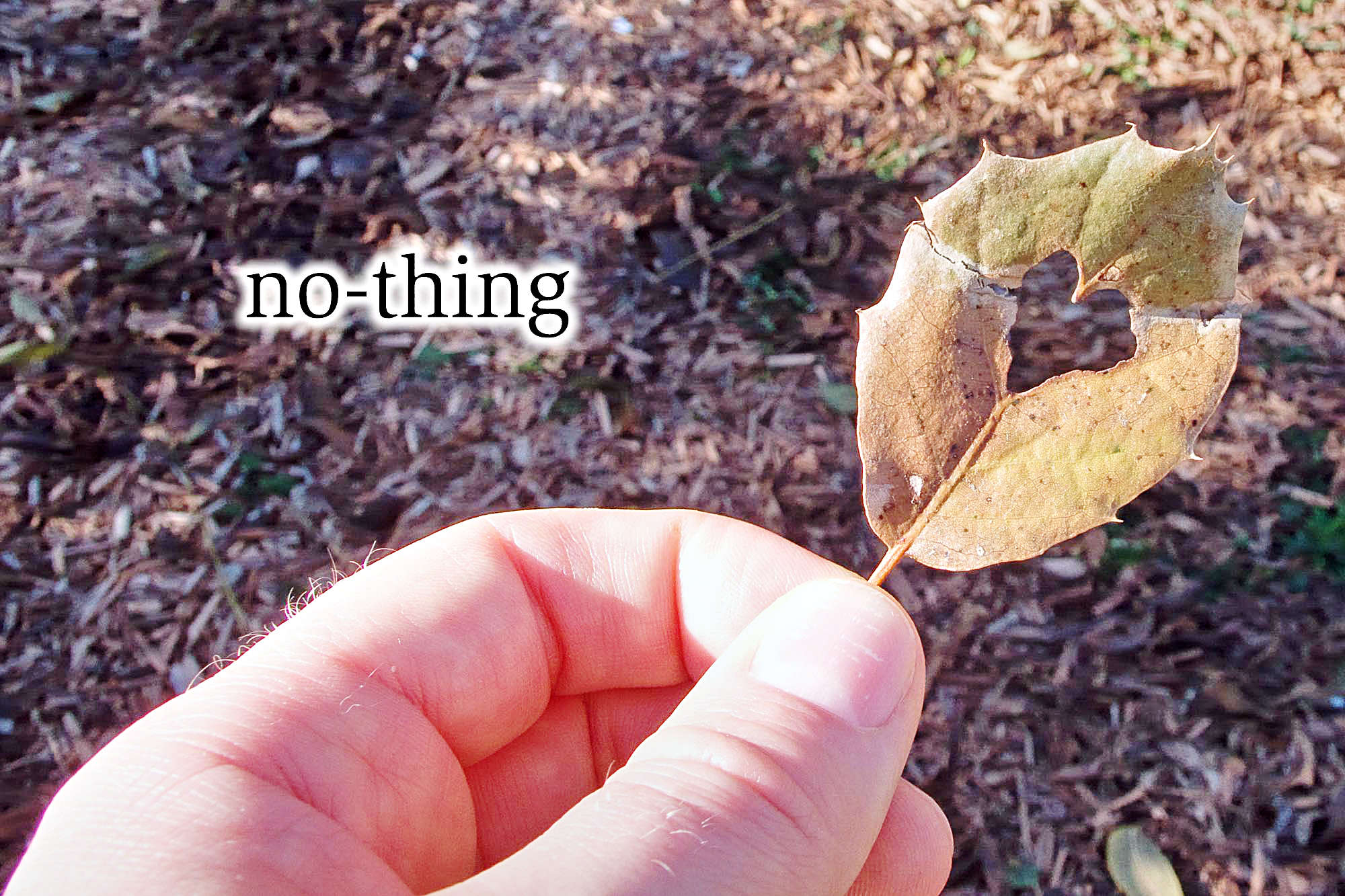
Let’s uncover and celebrate
what is prior to thinking.
“In quietness and confidence is your strength.”
Isaiah 30:15
Not as some religious blah-blah,
but as a sincere invitation
to notice and expand our comfort-zone:This is what the Sovereign LORD,
the Holy One of Israel, says:
‘Only in returning to me
and resting in me
will you be saved.
In quietness and confidence
is your strength.
But you would have none of it.’
Let’s be wise and productive,
not wasteful.
“If you don’t pay appropriate attention to what has your attention, it will take more of your attention than it deserves.”
David Allen (GTD, Getting Things Done)
“Your mind is for having ideas, not holding them.”
“Things rarely get stuck because of lack of time. They get stuck because the doing of them has not been defined.”
“Much of the stress that people feel doesn’t come from having too much to do. It comes from not finishing what they’ve started.”
The short-term-memory part of your mind — the part that tends to hold all of the incomplete, undecided, and unorganized “stuff” — functions much like RAM on a personal computer. Your conscious mind, like the computer screen, is a focusing tool, not a storage place. You can think about only two or three things at once. But the incomplete items are still being stored in the short-term-memory space. And as with RAM, there’s limited capacity; there’s only so much “stuff” you can store in there and still have that part of your brain function at a high level. Most people walk around with their RAM bursting at the seams. They’re constantly distracted, their focus disturbed by their own internal mental overload.”

When is enough enough?
“Awareness is the greatest agent for change.”
Eckhart Tolle
“All the unhappiness of men comes from one single thing: not knowing how to remain peacefully at rest in a room.”
Blaise Pascal, (1623 – 1662)
French philosopher and mathematician.
“If we examine our thoughts,
we shall find them always occupied
with the past and the future.”
“Console thyself,
thou wouldst not seek Me,
if thou hadst not found Me.”(The Mystery of Jesus).
Here the seeking is already a sign
of what is sought.
Seeker and sought are not really two.
“Men never do evil
so completely and cheerfully
as when they do it
from religious conviction.”
“Chaos isn’t the problem;
how long it takes to find coherence
is the real game.”Doc Childre and Bruce Cryer
Claude.ai:
This line comes from Doc Childre and Bruce Cryer, co-authors of From Chaos to Coherence. Both were tied to the HeartMath Institute. The idea is that disruption is a given, so the useful question is how quickly you recover from it, not how to avoid it.Chaos is the weather, not the enemy. Markets shift, plans fall apart, people get upset, a client changes the spec at midnight. Trying to build a life or an organization with no chaos is a losing strategy and tends to make people brittle. If chaos is going to happen anyway, judging yourself by whether it happened misses the point.
The variable you control is recovery time. Two people can hit the same setback. One is rattled for ten minutes and then gets back to clear thinking. The other stays reactive for three days and makes several more bad decisions along the way. Most of the damage usually happens during that period of prolonged incoherence, not at the moment of disruption. Engineers would call this settling time: how long a system takes to stabilize after a jolt.
What “coherence” means for them. In HeartMath’s framing it works on several levels at once:
- Physiological: a smooth, ordered heart-rhythm pattern (heart rate variability), as opposed to a jagged, stressed one. They argue the body’s state shapes the quality of thinking.
- Emotional and mental: feelings, thoughts and intentions pointing the same way rather than pulling against each other.
- Organizational: a team that shares an understanding of what matters and can act together, even while circumstances are messy.
Why speed matters so much. When you’re incoherent, your perception narrows, you misread people, and you react instead of choosing. Each decision made in that state can create new chaos, so a slow recovery compounds. A quick return to coherence cuts that chain early.
It’s a trainable skill. The hopeful part of the quote is that you can’t stop chaos, but you can practice shortening the gap. In practice that usually means:
- Noticing early that you’ve been knocked off center.
- Doing something deliberate to settle your physiology. HeartMath teaches slow breathing focused on the heart area, paired with recalling a genuine positive feeling like appreciation.
- Re-orienting to what actually matters before acting.
With repetition, the time between “thrown off” and “back on my feet” gets shorter.
A musical analogy fits well. Every ensemble has moments where someone loses their place or a passage falls apart. A good group isn’t one that never stumbles. It’s one that finds the downbeat again within a bar or two, while a weaker group drifts for a whole page.
A fair caveat: not all chaos should be resolved quickly. Creative work, grief, and real strategic uncertainty sometimes need time in the mess. Forcing coherence too early can mean settling on a shallow answer. So the most generous reading of the quote isn’t “eliminate confusion fast.” It’s this: don’t let disruption run you for longer than it has to, and get back to a clear, centered place from which you can deal with whatever the chaos is actually asking of you.
Life as art…
Greetings from Carmel, California.
Born in Germany in 1966,
I moved to Carmel in 1999.
I am available for hire,
for interesting projects
in the field of art & education.
I am available for free
at the GardenOfFriends.com.
Shame, pride and embarrassment
can keep us trapped in the disguise of “me”.
The hypnotism of personhood can naturally relax in impersonal friendships, in-team-a-see, in an atmosphere of self-honesty.
Every experience can point us home,
as knowing what is looking.
Leave a Reply